From the rainforests of Ghana and the remote forest blocks of Liberia and Sierra Leone to the volcanic islands of São Tomé and Príncipe, West Africa offers some of the most distinctive and rewarding birding on the continent.
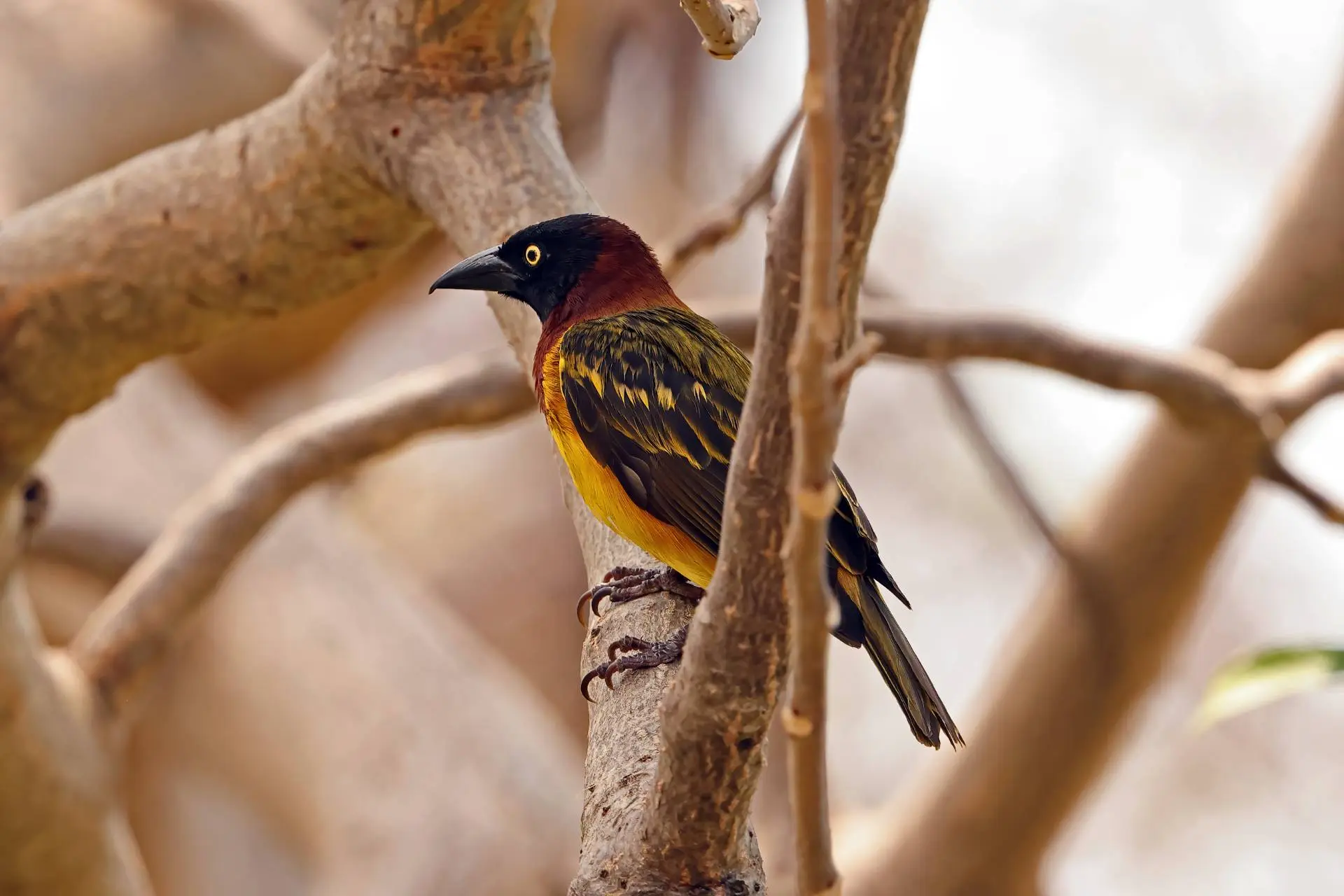
This is a region of exceptional variety. Coastal lagoons, lowland rainforest, forest-edge habitats, wooded savannah, mountain slopes and oceanic islands each support very different bird communities. For serious birders, the attraction lies not only in the number of species, but also in the opportunity to search for birds with extremely restricted ranges.
Some are endemic to individual islands and found nowhere else on Earth. Others are restricted to the Upper Guinea forests, a biodiversity-rich belt running through parts of Ghana, Ivory Coast, Liberia, Sierra Leone and neighbouring countries. Many are threatened by forest loss, hunting, mining, agricultural expansion and invasive species.
Specialist birding tours across West Africa
Ghana: From rainforest canopy to northern savannah
Ghana is one of the strongest introductions to West African birding because it combines a large range of habitats with a well-developed birding route. A single journey can include coastal lagoons, forest canopy, farmland, wetlands, dry woodland and northern savannah.
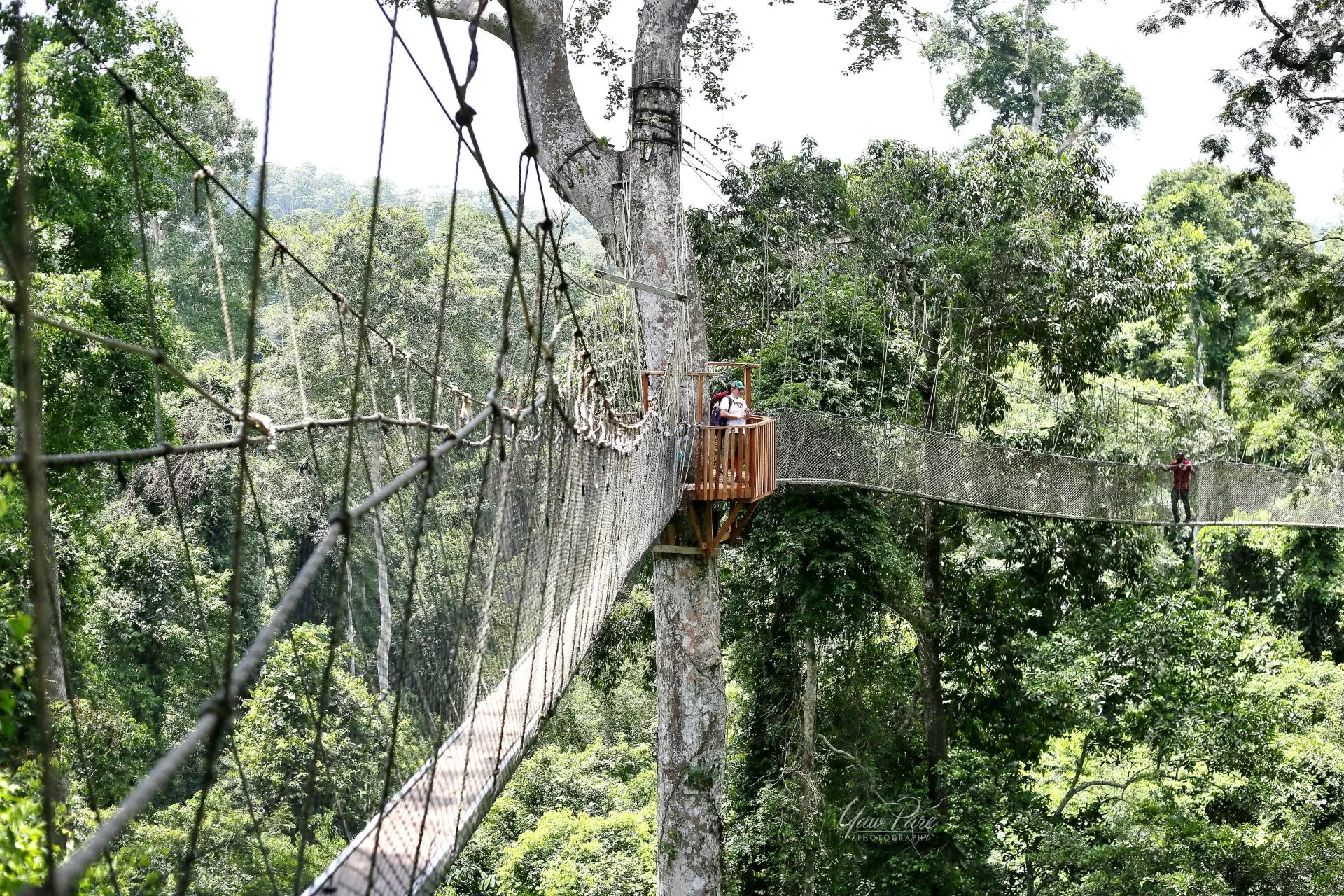
Kakum National Park is one of the country’s best-known birding locations. Its canopy walkway gives birders access to a level of the forest that is often difficult to observe from the ground. Species can include Yellow-billed Turaco, Black Dwarf Hornbill, Violet-backed Hyliota, Forest Woodhoopoe, Fire-bellied Woodpecker and several sunbirds, greenbuls and forest flycatchers.
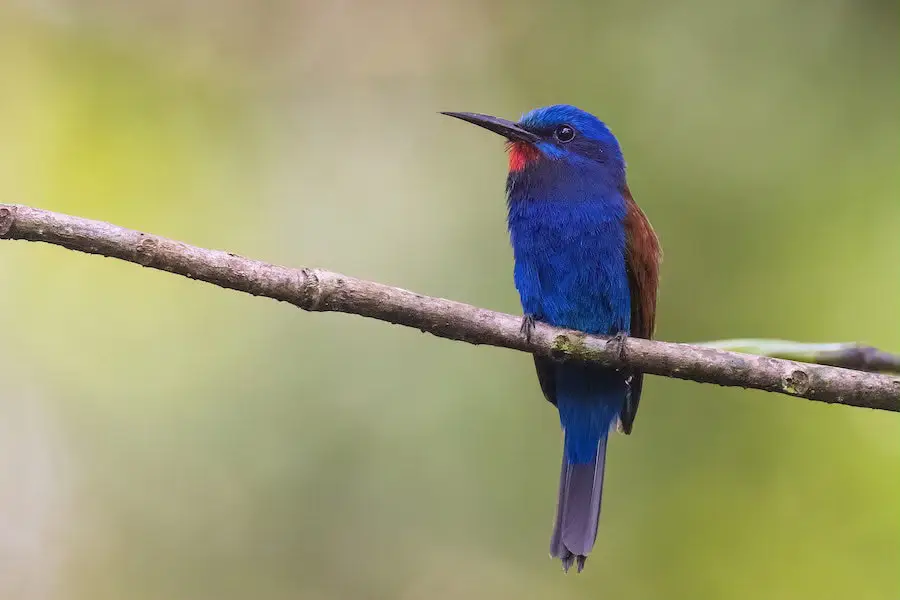
Further west, the Ankasa Conservation Area protects one of Ghana’s richest remaining rainforest ecosystems. The dense forest, streams, clearings and surrounding farm bush provide habitat for sought-after Upper Guinea species. Ankasa is particularly important for forest birding, with possibilities including White-breasted Guineafowl, Yellow-bearded Greenbul, Western Wattled Cuckooshrike, Blue-headed Bee-eater and several hornbills, kingfishers and forest robins.
Ankasa Reserve Lodge, positioned at the entrance to the conservation area, gives birders direct access to the forest and its surrounding habitats. Birding here requires patience and experienced fieldcraft. Many forest species are first detected by sound, and local knowledge of feeding areas, clearings and forest trails can make a significant difference.
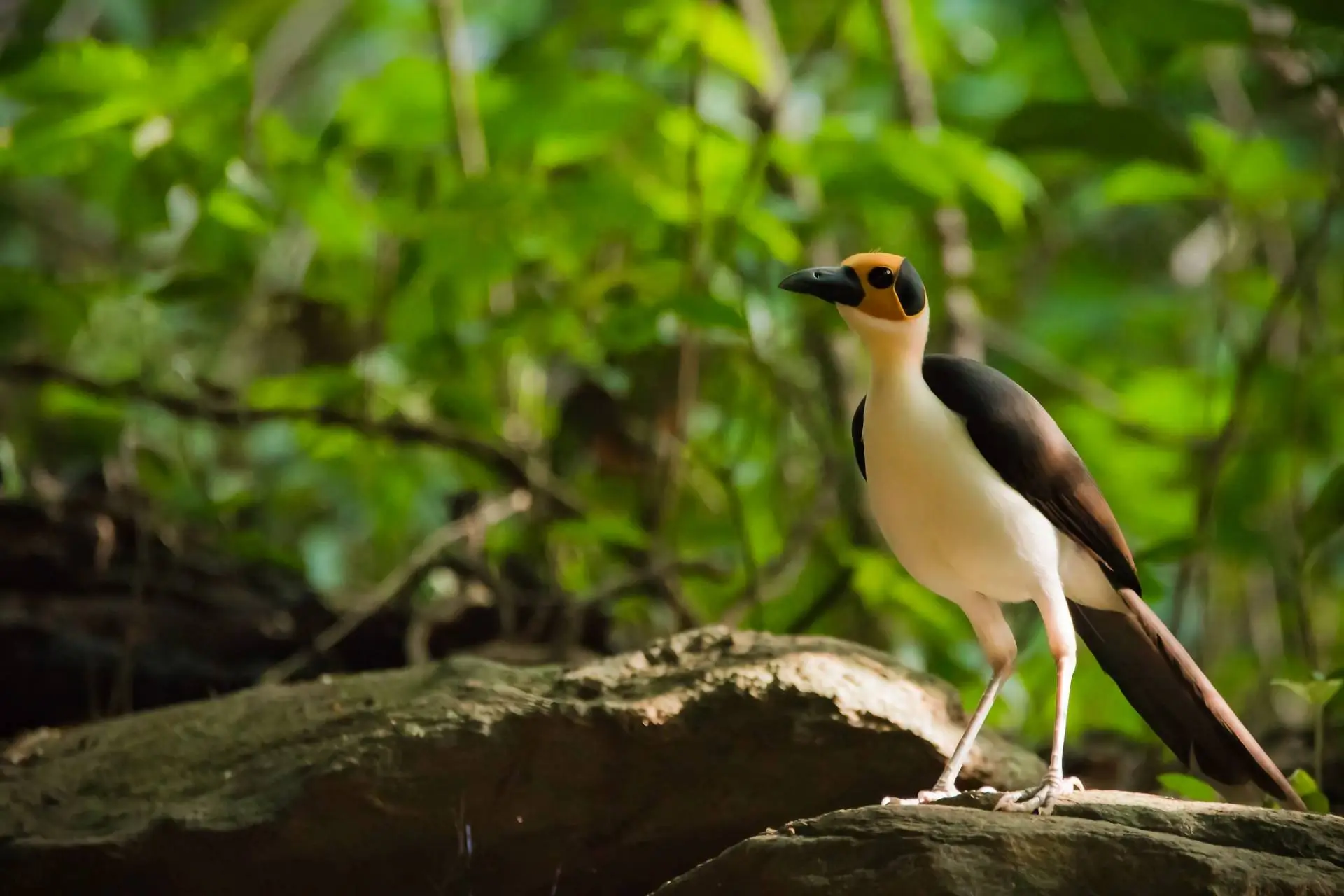
One of Ghana’s most famous target birds is the White-necked Rockfowl, also known as the Yellow-headed Picathartes. It nests on rock faces and beneath overhangs in forested areas. Community-linked sites such as Nyame Bepo have demonstrated how birding tourism can give local people a practical reason to protect nesting areas and surrounding forest.
Northern Ghana provides a sharp ecological contrast. Mole National Park and nearby woodland habitats offer species associated with the Guinea savannah, including Abyssinian Ground Hornbill, Senegal Parrot, Violet Turaco, Bearded Barbet, Standard-winged Nightjar and a wide variety of raptors, rollers, bee-eaters and estrildid finches.
This habitat range is why Ghana works so well for both first-time visitors and experienced birders seeking Upper Guinea specialities within a broader West African list.
17 Day Ghana Birding and Nature Tour
Ivory Coast: Taï, Nimba and the Upper Guinea forest specialists
Ivory Coast holds some of the most important remaining rainforest in West Africa. It is particularly significant for birders interested in Upper Guinea forest species, many of which have limited distributions and are difficult to find elsewhere.
Taï National Park protects one of the largest remaining areas of primary rainforest in the region. Its birdlife includes large forest hornbills, turacos, greenbuls, flycatchers, sunbirds and several threatened or range-restricted species. Potential targets include White-breasted Guineafowl, Yellow-casqued Hornbill, Brown-cheeked Hornbill, Rufous Fishing Owl and Western Wattled Cuckooshrike.
The forest is dense, and many birds remain high in the canopy or move quietly through the understorey. Successful birding depends heavily on identifying calls and understanding the habits of mixed-species feeding flocks.
Banco National Park, close to Abidjan, offers a more accessible introduction to southern Ivory Coast’s forest birdlife. Although surrounded by urban development, it remains an important forest refuge and can provide valuable birding at the beginning or end of a longer itinerary.
In the north-west, the Mount Nimba region adds high-altitude forest, grassland and rocky mountain habitat. The wider Nimba landscape is associated with restricted-range birds such as the Nimba Flycatcher and Sierra Leone Prinia. These species are not confined to Ivory Coast alone, but their small distributions across the border region make them major targets for specialist Upper Guinea birding tours.
Ivory Coast’s conservation challenge is considerable. Agricultural expansion, mining, hunting and forest fragmentation have placed pressure on many habitats. Visiting protected areas with qualified guides and using local services helps ensure that standing forest produces visible economic value for surrounding communities.
Liberia: Frontier birding in exceptional forest
Liberia remains one of the least explored birding destinations in Africa. Its attraction lies in extensive Upper Guinea rainforest, a relatively low volume of tourism and the opportunity to search for species that are difficult or impossible to see on more conventional African routes.
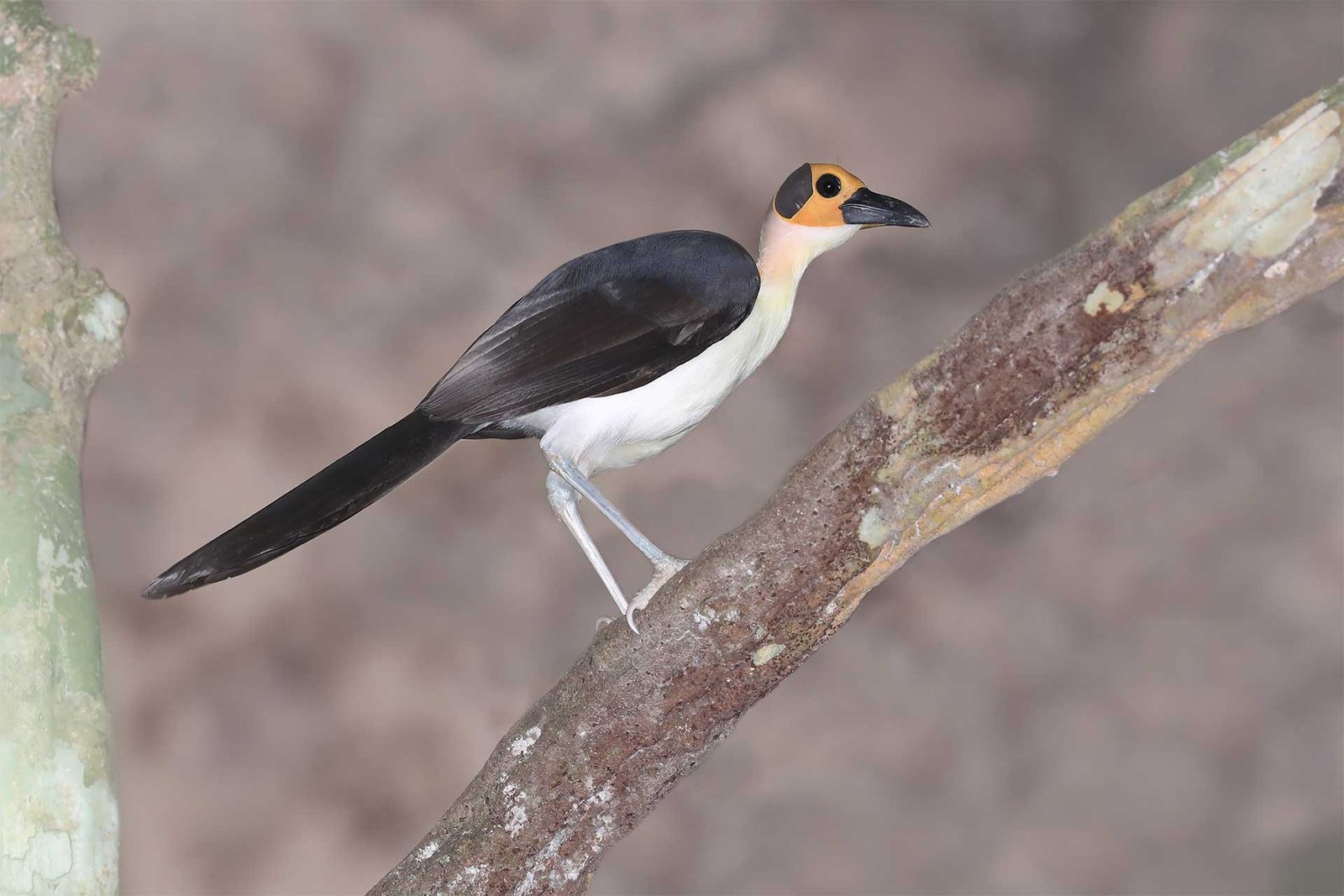
Gola Forest National Park forms part of a wider transboundary forest landscape shared with Sierra Leone. It protects habitat for White-necked Rockfowl, Rufous Fishing Owl, Nimba Flycatcher, Gola Malimbe, White-breasted Guineafowl and several other forest specialists.
Recent conservation monitoring in Liberia recorded 55 active White-necked Rockfowl nests within Gola Forest National Park. This type of fieldwork is important because the species depends on particular nesting structures and intact forest conditions. Protecting known colonies, monitoring breeding success and involving nearby communities all contribute to its long-term survival.
Sapo National Park, Liberia’s largest protected rainforest, is another significant birding area. Access and logistics can be demanding, but the rewards include remote forest birding in habitat supporting Timneh Parrot, Rufous Fishing Owl, White-breasted Guineafowl, Brown-cheeked Hornbill and many other Upper Guinea species.
The East Nimba Nature Reserve brings another set of possibilities. Its mountain forest and grassland habitats support species associated with the wider Nimba range, including Nimba Flycatcher and Sierra Leone Prinia.
Liberia is best suited to birders who understand that frontier birding does not always provide instant sightings. Roads can be challenging, forests are dense and some targets require repeated effort. For those prepared to invest the time, it offers one of the most authentic and important birding experiences in West Africa.
Sierra Leone: Gola-Tiwai and the White-necked Rockfowl
Sierra Leone has steadily gained recognition as a serious birding destination. Its strongest asset is the Gola-Tiwai Complex, which became the country’s first natural UNESCO World Heritage Site in 2025.
The complex includes Gola Rainforest National Park and Tiwai Island Wildlife Sanctuary. It supports up to 448 bird species, including globally important populations of White-breasted Guineafowl, Timneh Parrot and White-necked Rockfowl.
Other notable species include Gola Malimbe, Yellow-bearded Greenbul, Rufous Fishing Owl, Nimba Flycatcher, Brown-cheeked Hornbill, Blue-headed Wood Dove and Shining Drongo. Fourteen bird species threatened with extinction have been recorded in the wider Gola forest landscape.
The White-necked Rockfowl is one of Sierra Leone’s flagship birds. It nests beneath large forest boulders and rock overhangs, often using traditional colony sites. Its survival in parts of the Gola landscape may be linked partly to the cultural importance given to the species by local Mende communities.
This connection between birds, culture and community protection is central to effective conservation. Protected-area status alone is rarely enough. Forest conservation works best when local communities receive meaningful benefits from guiding, tourism, research and sustainable livelihoods.
Beyond Gola, Sierra Leone offers birding in the Tingi Hills, the Western Area Peninsula Forest and Outamba-Kilimi National Park. These locations add montane forest, coastal habitat, woodland and savannah species to the national birding experience.
São Tomé and Príncipe: An island-endemic stronghold
São Tomé and Príncipe is in a different category from mainland West Africa. Its long isolation in the Gulf of Guinea has produced an extraordinary concentration of endemic birds.
Unlike the Upper Guinea specialities shared across several mainland countries, many birds on these islands occur nowhere else. A well-planned tour across São Tomé and Príncipe can target an exceptional range of island endemics within a relatively compact area.
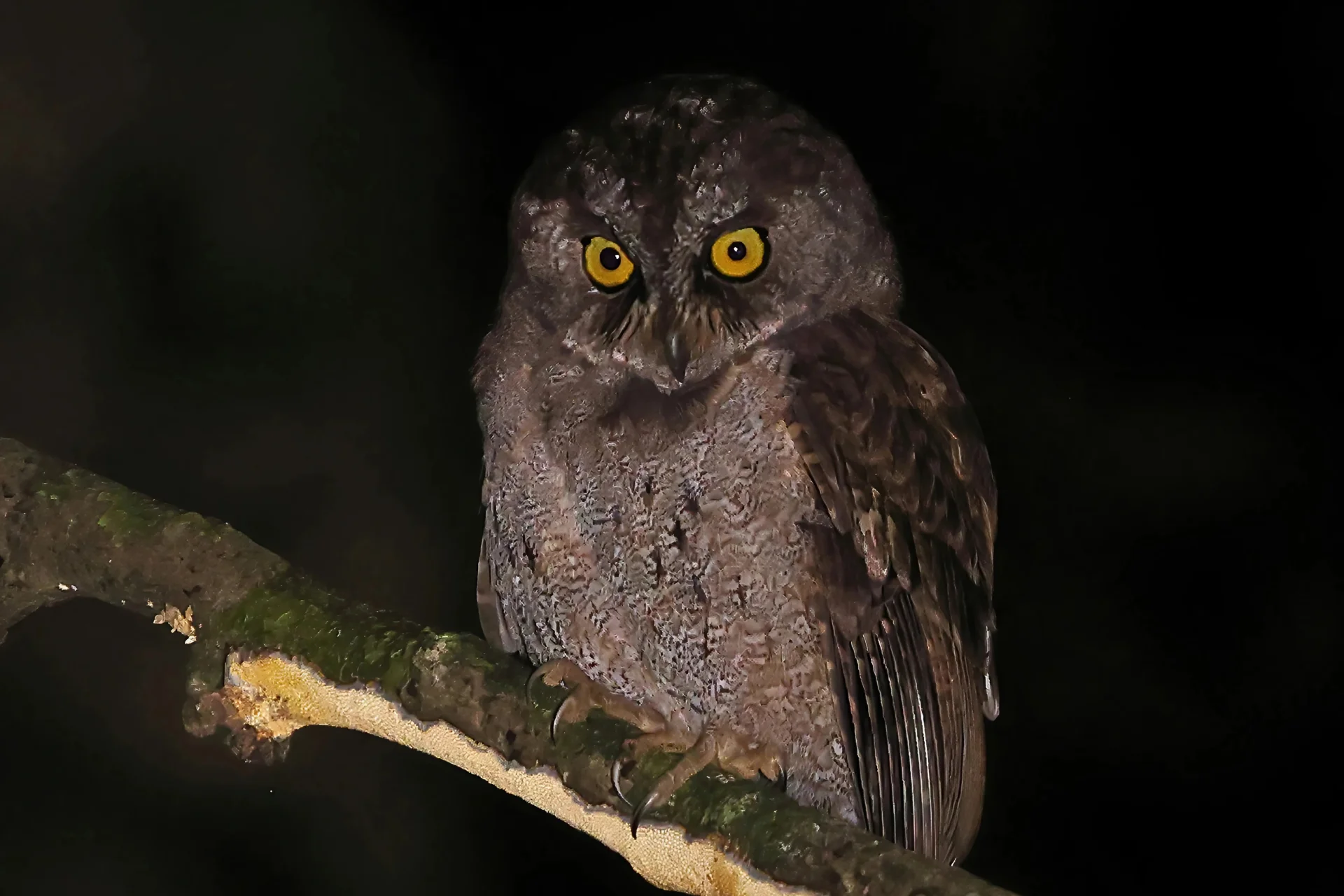
On São Tomé, sought-after species include São Tomé Scops Owl, São Tomé Oriole, São Tomé Shorttail, São Tomé Weaver, Giant Weaver, Giant Sunbird, São Tomé Olive Pigeon and São Tomé Paradise Flycatcher.
Three species are of exceptional conservation concern: the Dwarf Olive Ibis, also known as the São Tomé Ibis; the São Tomé Grosbeak; and Newton’s Fiscal. All three are endemic to São Tomé and classified as Critically Endangered. Their remaining populations are closely associated with the island’s southern lowland forests.
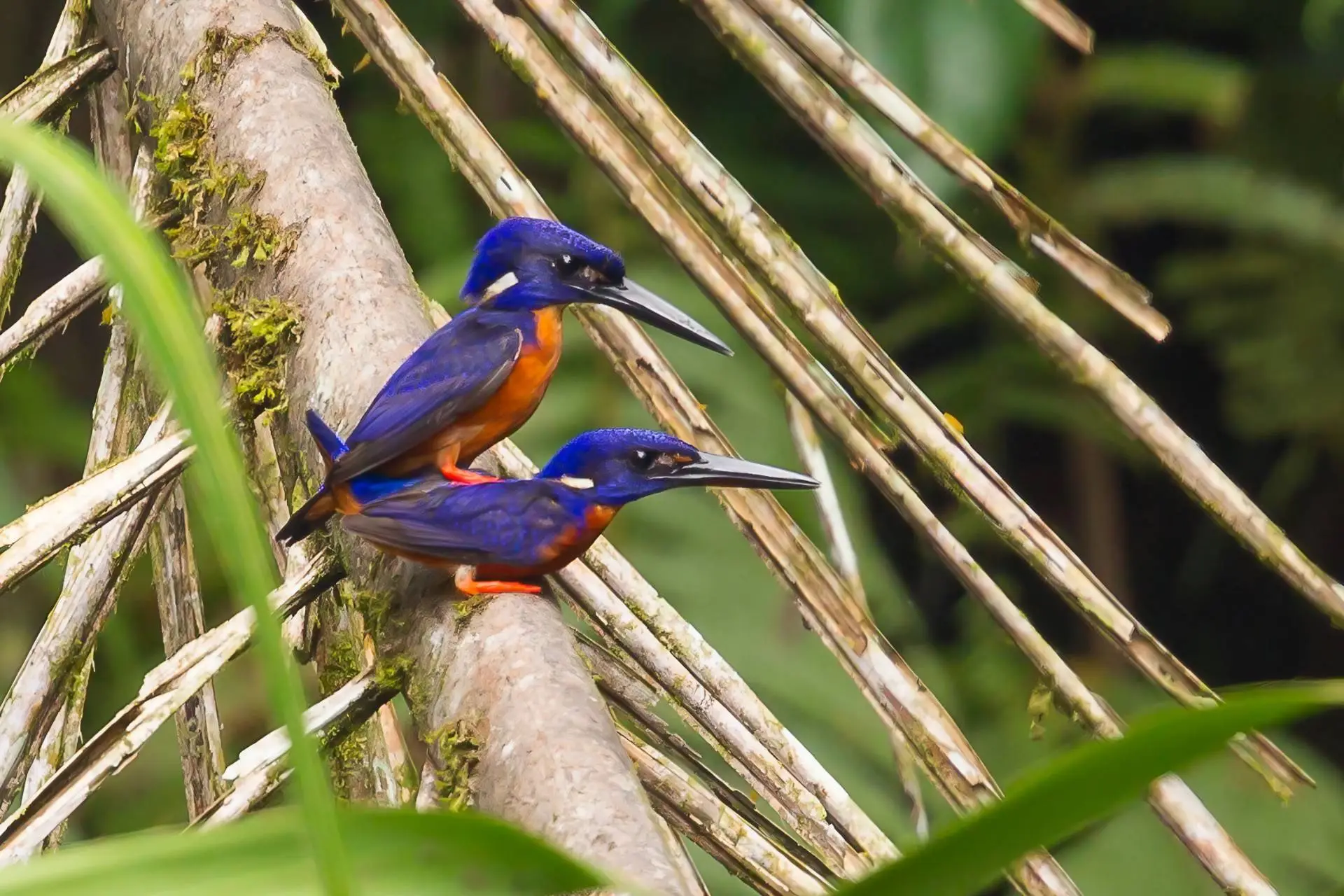
Príncipe has its own distinct group of specialities, including Príncipe Kingfisher, Príncipe Starling, Príncipe Speirops, Príncipe Sunbird and Dohrn’s Thrush-Babbler. The island’s forests and mountain habitats provide a very different birding experience from São Tomé, making a two-island itinerary especially rewarding.
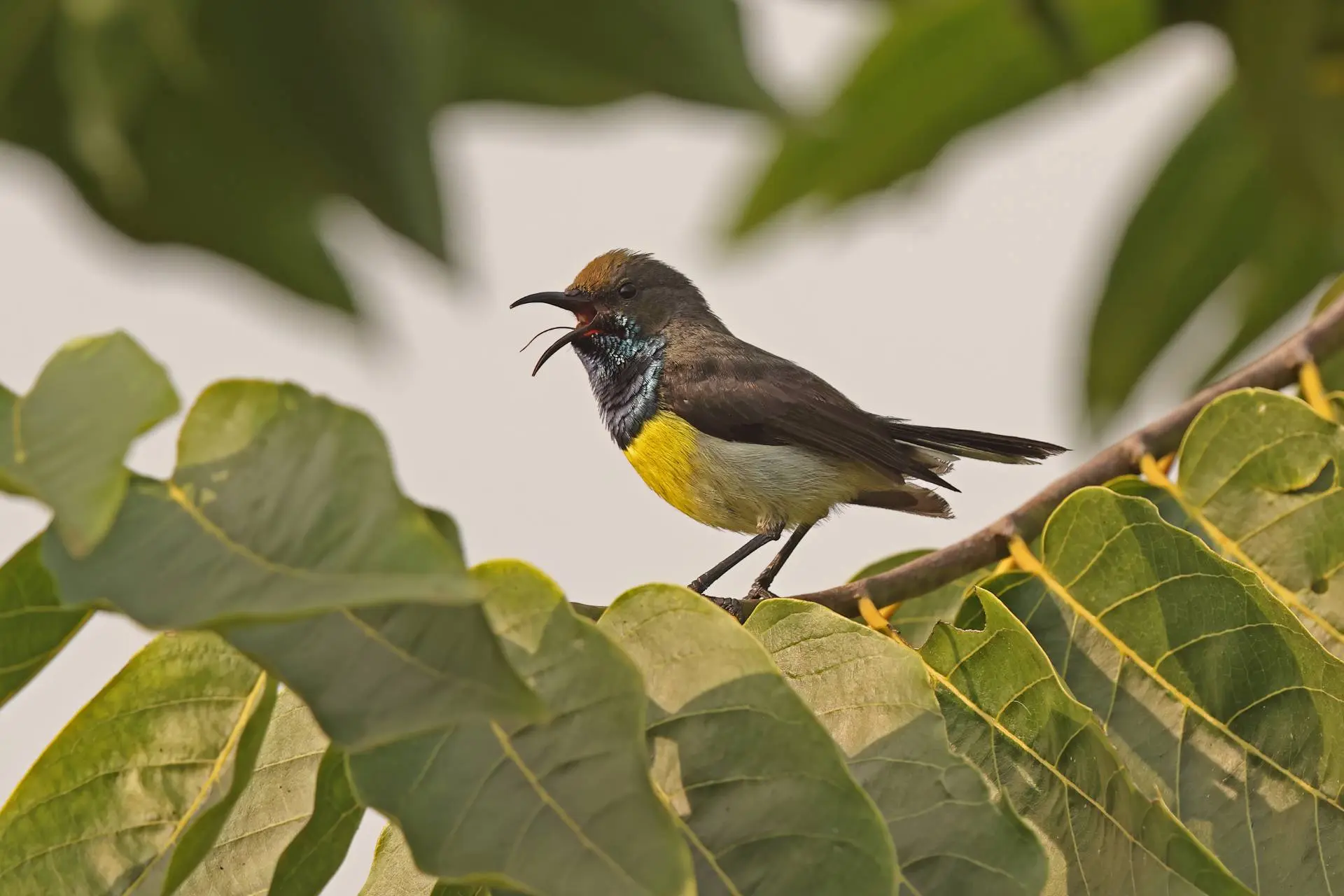
Important birding locations include Obo Natural Park, Monte Carmo, Lagoa Amélia, Bom Sucesso, Antena Macambrara and the forested interior of Príncipe. Some targets require long walks, steep terrain and early starts, while others can be found in plantation landscapes, secondary forest or even gardens.
Ashanbti African Tours in partnership with Exotic São Tomé and Príncipe work with expert local guides and provides specialist birding, wildlife and research-focused trips across the islands. Local guides are particularly important here because several species have tiny ranges, subtle calls or highly specific habitat requirements.
Current conservation work includes research into the distribution of the three Critically Endangered endemic birds, mapping threats and human pressure, building local conservation capacity and supporting community-based guardians who monitor important habitat.
Threats include forest clearance, agricultural development, hunting and invasive species. Because the rarest birds are confined to small areas, even limited habitat change can have serious consequences.
São Tomé and Príncipe Birding Tours
Birding tourism and conservation
Birding tourism cannot replace effective protected-area management, scientific research or national conservation policy. It can, however, strengthen all three.
Specialist tours create demand for skilled local guides, forest accommodation, drivers, community services and protected-area access. A bird that may otherwise appear to have little economic relevance can become a reason to conserve an entire forest or nesting site.
This is particularly clear with the White-necked Rockfowl. Community guiding and tourism linked to known nesting colonies have helped raise the profile of the species in Ghana, Liberia and Sierra Leone. Similar principles apply to the endemic birds of São Tomé and Príncipe, where specialist visitors bring attention and income to landscapes that hold species found nowhere else.
Responsible birding also means limiting disturbance. Guides must understand how closely a group can approach a nesting site, when playback should be restricted, and how to manage photography around sensitive species. Rare birds should never be placed under unnecessary pressure for the sake of a sighting or photograph.
Experience and expert guiding matter
West African forest birding is highly specialised. Many target birds are more often heard than seen. Others appear briefly in mixed flocks, remain high in the canopy or occupy small areas of suitable habitat.
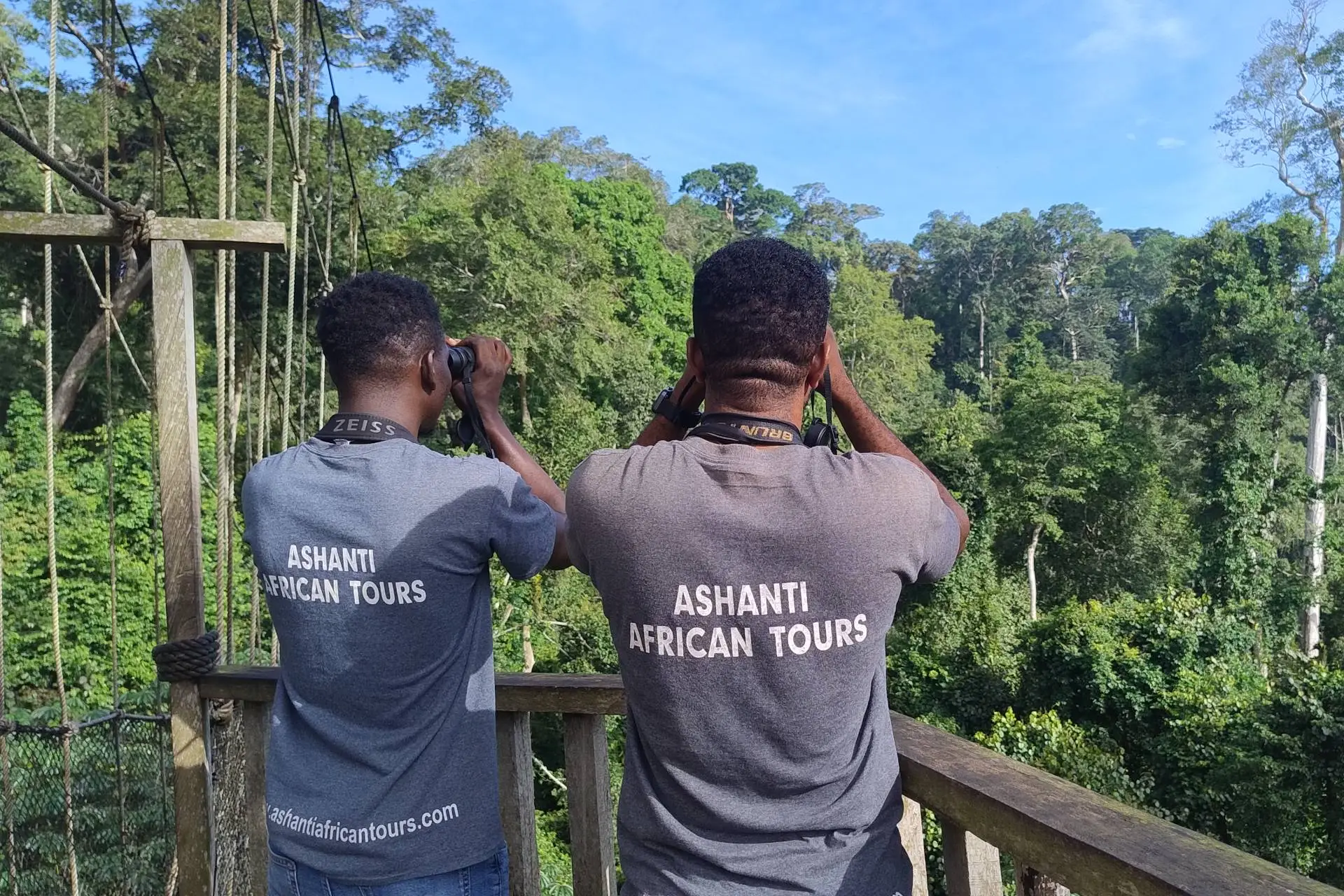
Ashanti African Tours has operated across West Africa for more than two decades and works with a team of specialist local guides. Our birding guides combine visual identification with detailed knowledge of songs, calls, habitats, seasonal movements and established territories.
Several have backgrounds in agriculture, forestry, natural science and ecology, alongside years of practical field experience. Just as importantly, they understand the logistics of working across West Africa: road conditions, park access, border crossings, accommodation and the timing needed to reach key sites when birds are most active.
This expertise allows tours to be adapted to different priorities. Some travellers want the largest possible species list. Others are focused on Upper Guinea endemics, island endemics, photography or a short list of difficult targets. A specialist tour should reflect those goals rather than forcing every birder into the same itinerary.
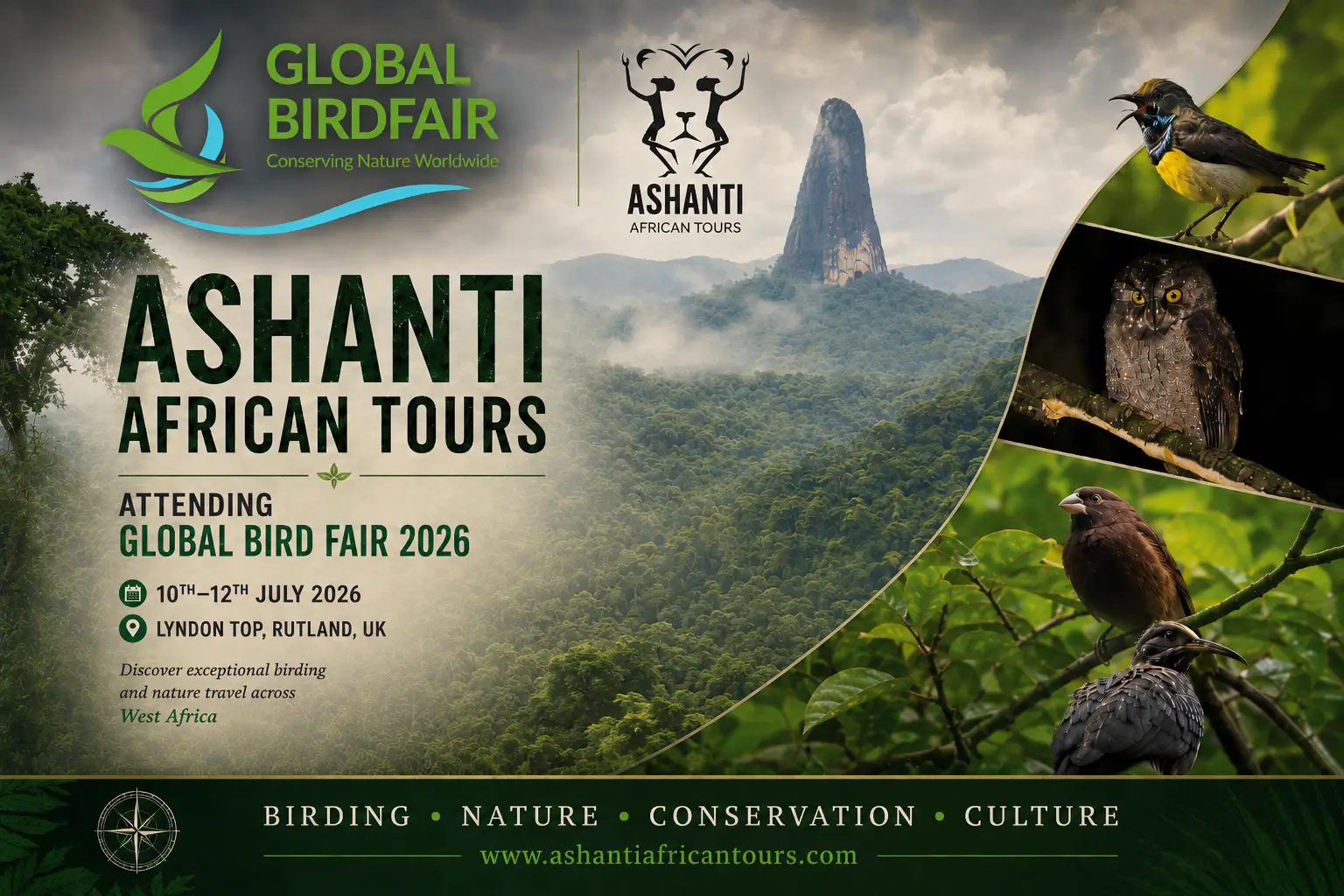
Meet Ashanti African Tours at the Global Bird Fair 2026
The Global Bird Fair is an ideal opportunity to discuss the possibilities for birding across this remarkable region.
Ashanti African Tours will be attending from 10–12 July 2026 at Lyndon Top, Rutland, UK. You will find us in the Swallow Marquee at Stand S102.
Visit the stand to discuss specialist birding tours in:
- Ghana
- Ivory Coast
- Liberia
- Sierra Leone
- São Tomé and Príncipe
Whether your priority is the White-necked Rockfowl, the rare forest birds of Gola and Taï, the mountain specialities of Nimba or the exceptional island endemics of São Tomé and Príncipe, our team can help you understand the habitats, logistics and field time each destination requires.
West Africa does not offer easy birding everywhere. What it offers is something more valuable: remarkable habitats, highly localised species, expert local knowledge and the opportunity to support conservation in landscapes of genuine global importance.
For more information on the Global Bird Fair