Ghana has become one of Africa’s most important destinations for heritage travel, particularly for members of the African diaspora seeking to explore the history, culture and connections that link West Africa with communities across the Atlantic.
The landmark Year of Return in 2019 brought international attention to this relationship, marking 400 years since the recorded arrival of enslaved Africans in Virginia. Its successor, Beyond the Return, continues that connection through a decade-long programme focused on tourism, Pan-African heritage, cultural exchange and deeper engagement between Ghana and the global African diaspora.
But Ghana’s heritage story extends far beyond the idea of simply “returning”.
To understand the country properly means travelling beyond the best-known landmarks and exploring the many layers of Ghanaian history: the transatlantic slave trade and the routes that preceded it, the powerful Asante Kingdom, the struggle for independence, Pan-Africanism, traditional belief systems, craftsmanship, festivals and communities where cultural traditions remain very much alive.
For the heritage traveller, Ghana rewards curiosity.
Begin with Cape Coast and Elmina – but understand the wider story
For many heritage travellers, the journey begins on Ghana’s Central Region coastline.
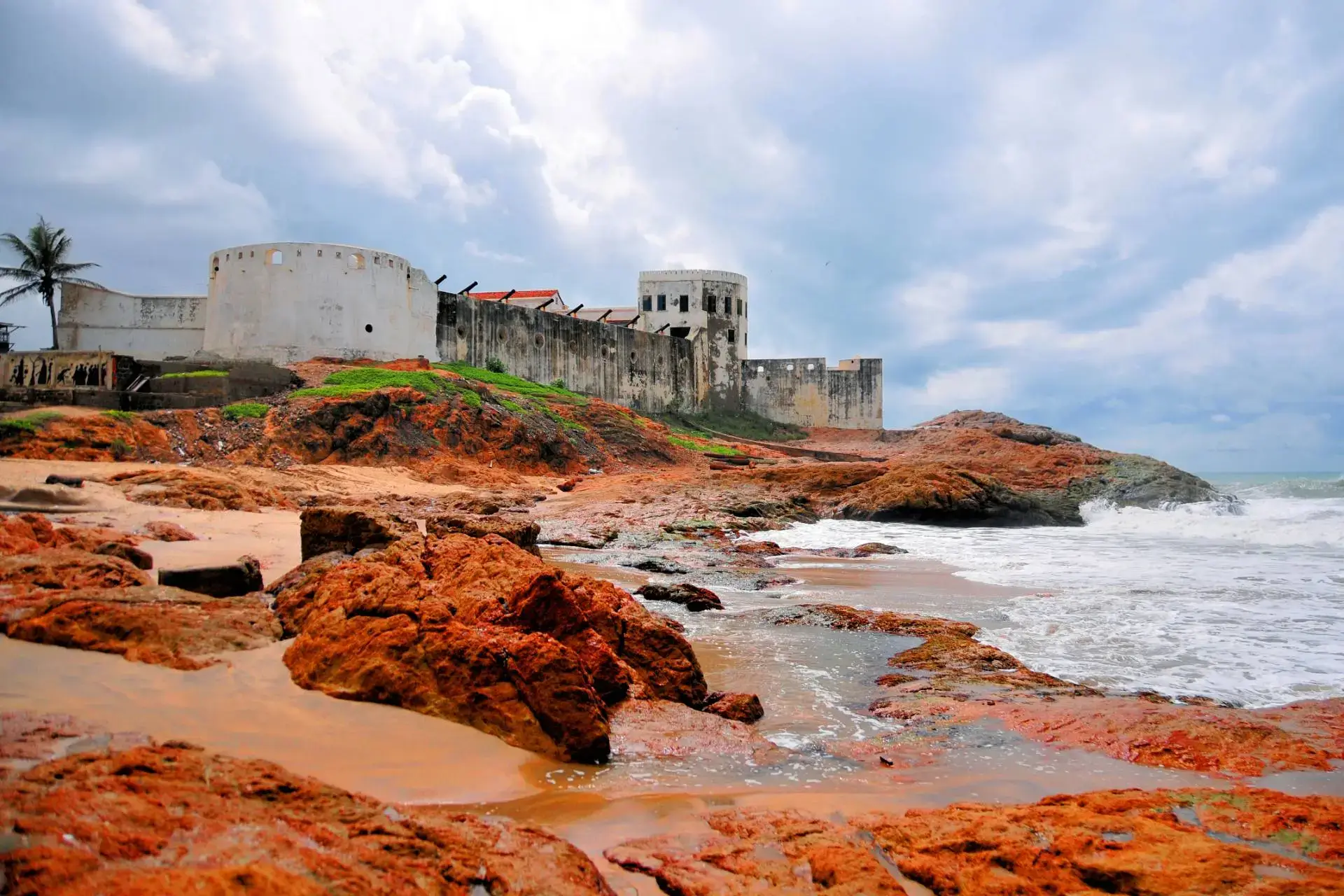
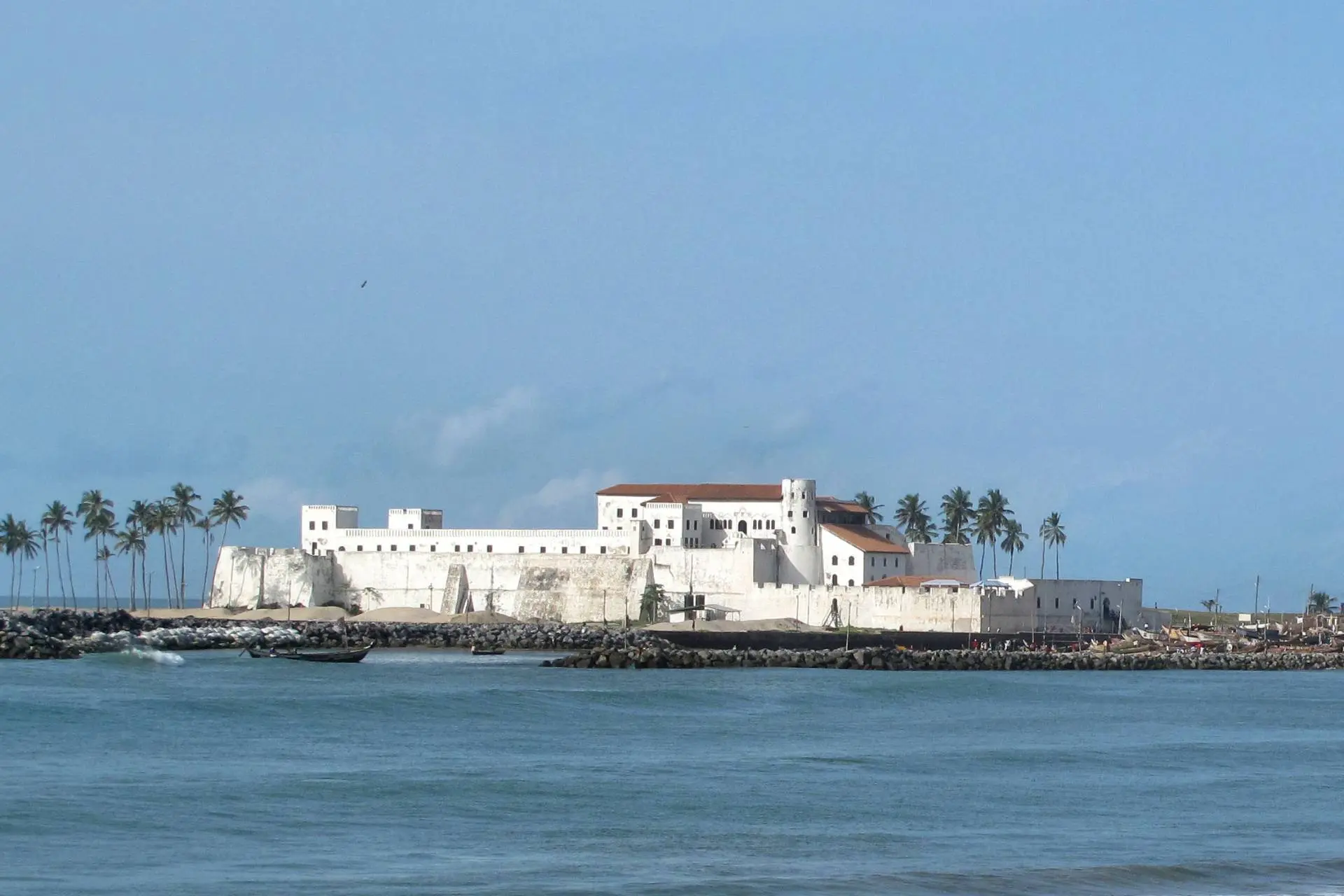
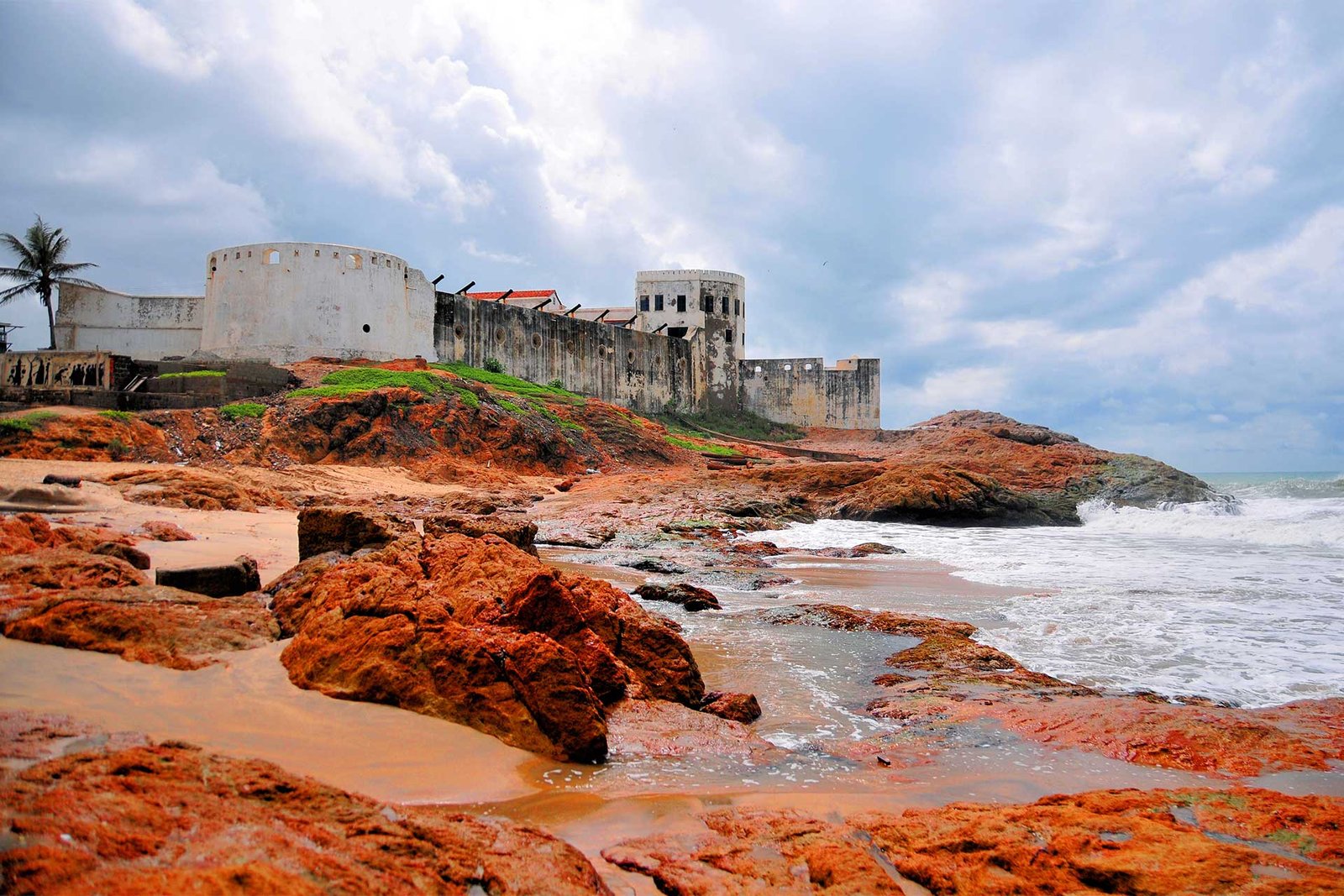
Cape Coast Castle and Elmina Castle are among the most significant surviving monuments associated with the transatlantic slave trade. Elmina Castle was constructed by the Portuguese in 1482, initially as a fortified trading post. Cape Coast Castle later became an important British centre on the Gold Coast.
Both form part of Ghana’s UNESCO-listed forts and castles, a remarkable collection of coastal fortifications established by European trading powers between the fifteenth and eighteenth centuries.
Their dungeons, courtyards and Doors of No Return provide powerful physical evidence of a history that affected millions of people and reshaped societies across Africa, Europe and the Americas.
For diaspora travellers in particular, visiting these sites can be deeply emotional.
But the history should not begin at the castle door.
The people imprisoned in these forts had already travelled long distances before reaching the coast. Understanding those journeys adds an important dimension to the experience.
Explore our African Heritage – Beyond the Return tour
Follow the journey inland to Assin Manso
Around an hour north of Cape Coast lies Assin Manso Ancestral Slave River Park, one of Ghana’s most important sites of memory.
Assin Manso was a major stopping point on the routes that brought captive Africans from the interior towards the coast. It is remembered particularly as the location where captives were taken to the river to bathe before continuing towards the slave castles.
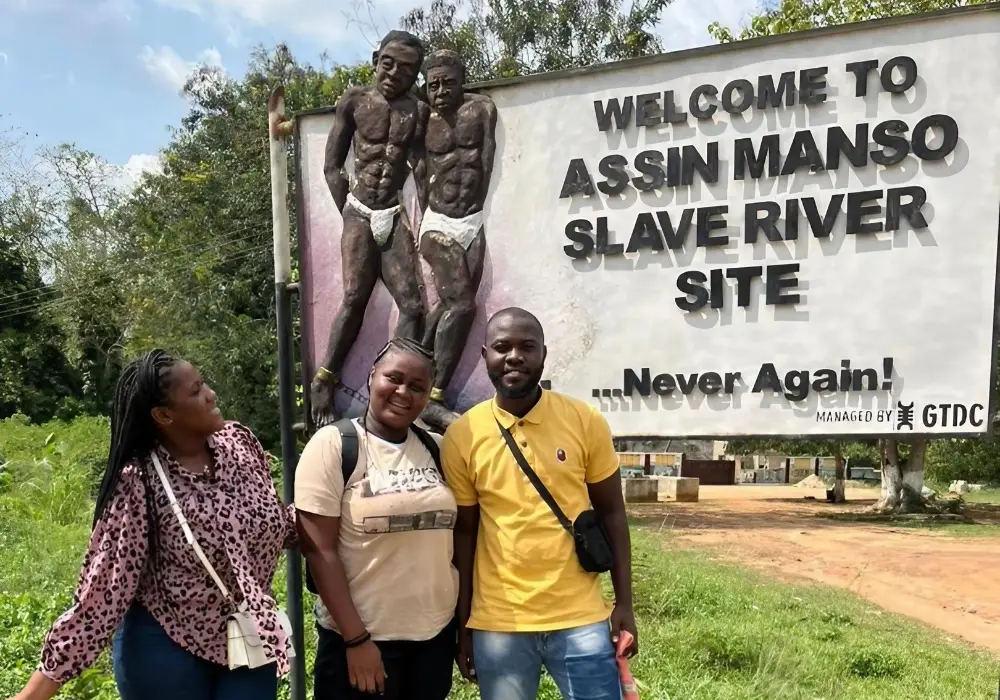
Today, the site includes the Ancestral River, a graveyard containing the returned remains of two members of the African diaspora, and the Memorial Wall of Return.
Visiting Assin Manso before Cape Coast or Elmina provides valuable context. Instead of seeing the castles as isolated monuments, travellers begin to understand a much larger network that stretched hundreds of kilometres into the interior.
For those who want to follow that history further, places such as Pikworo Slave Camp in northern Ghana, the former Salaga Slave Market, and Bono Manso reveal how complex and extensive those internal routes were.
At Pikworo, captives were held before being forced south towards Salaga and eventually the coast. These inland heritage sites are less visited than Cape Coast and Elmina, but they help complete a story that cannot be understood from the coastline alone.
Discover the living heritage of the Asante Kingdom
Ghanaian heritage is not defined only by the slave trade.
Travelling north to Kumasi introduces one of the most important political and cultural traditions in West African history: the Asante Kingdom.
The Asante rose to become one of the most powerful states in the region, developing sophisticated systems of government, military organisation, trade and diplomacy. Gold played a central economic and symbolic role, while traditions surrounding the Golden Stool, chieftaincy and royal authority remain important today.
Unlike many historic kingdoms encountered through ruins or archaeological remains, Asante culture is still very much alive.
The Manhyia Palace Museum provides an excellent introduction. The historic building was constructed in 1925 for Asantehene Prempeh I following his return from exile in the Seychelles. Its collections and stories help visitors understand the monarchy, colonial confrontation and the continuing importance of the Asantehene.
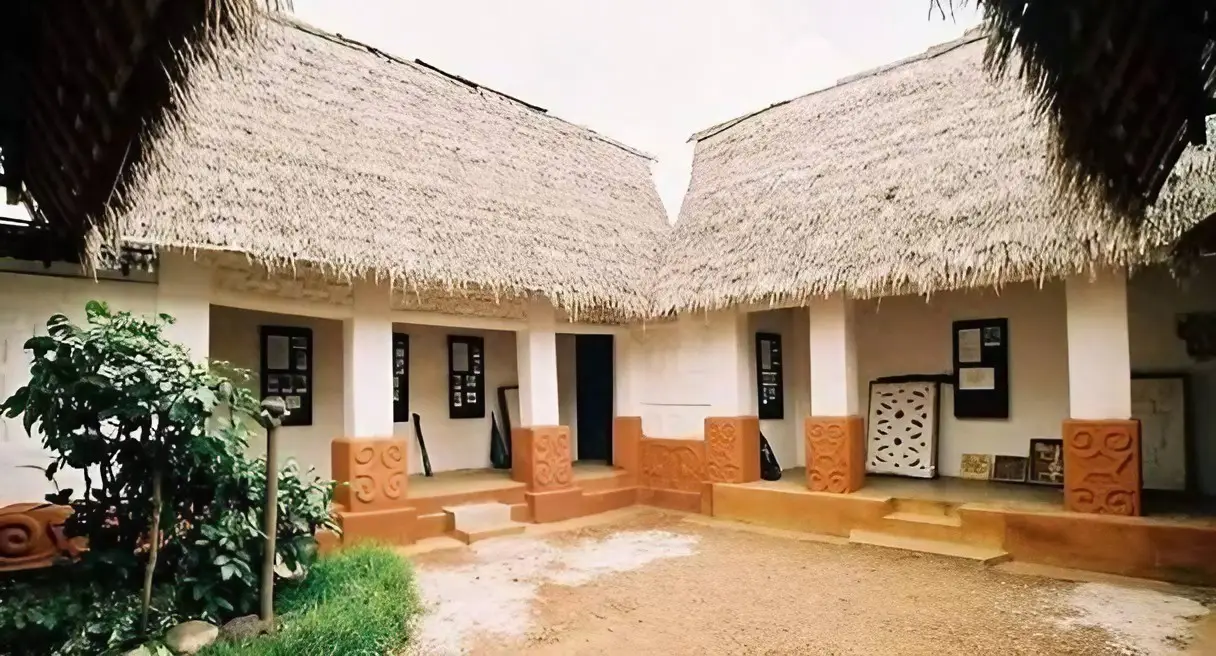
Beyond Kumasi itself are the Asante Traditional Buildings, Ghana’s second UNESCO World Heritage property. These surviving shrines near Kumasi preserve a distinctive architectural tradition using timber, bamboo and mud plaster, together with symbolic decorative motifs connected with Asante beliefs.
They are particularly valuable because they demonstrate that heritage is not only about political events. Architecture, spirituality, art and philosophy are equally important parts of the story.
Heritage and cultural journeys through Ghana
Experience craftsmanship as living history
Some of Ghana’s strongest heritage experiences are found not inside museums but in communities where skills have been passed from one generation to the next.
Around Kumasi, villages specialise in traditions including Kente weaving, Adinkra printing, pottery and wood carving.
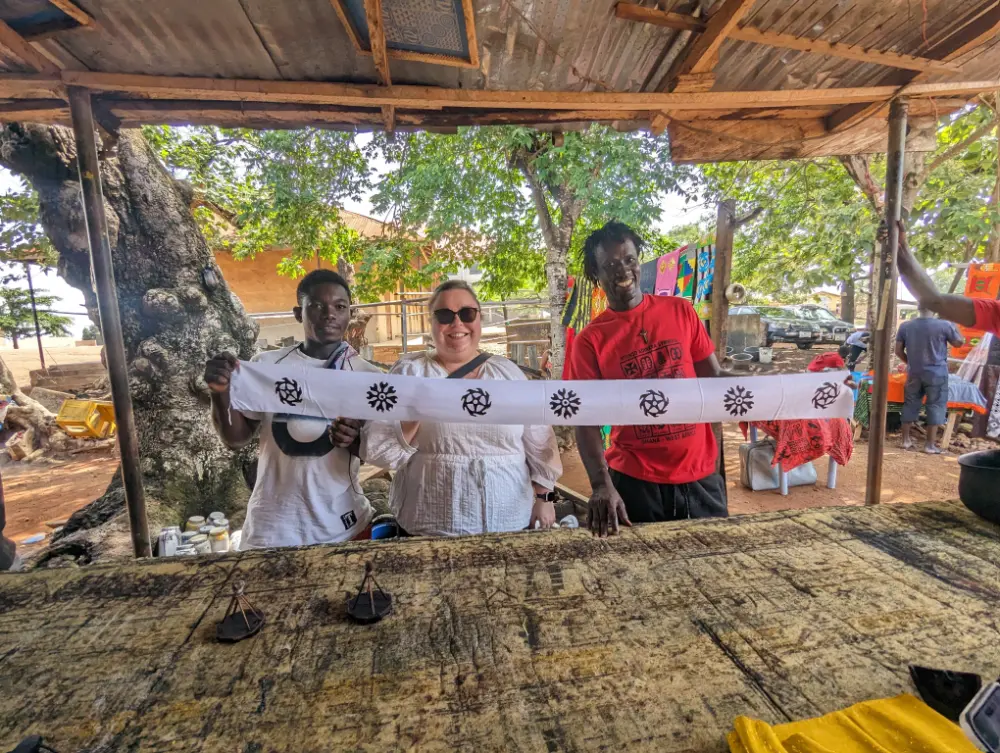
Kente is perhaps the best known internationally, but seeing it produced by hand reveals a complexity that finished cloth alone cannot communicate. Colours, patterns and designs may carry specific meanings and associations, while the weaving itself represents generations of accumulated knowledge.
Adinkra offers another window into Asante thought. Its symbols communicate concepts relating to leadership, wisdom, unity, spirituality, resilience and human relationships.
Visiting the places where these traditions continue is an important reminder that heritage is not something Ghana has simply preserved from the past.
It is something people continue to make.
Experience Kente weaving on our Ghana Black Star Experience tour
Explore the story of independence in Accra
Ghana’s modern heritage is equally significant.
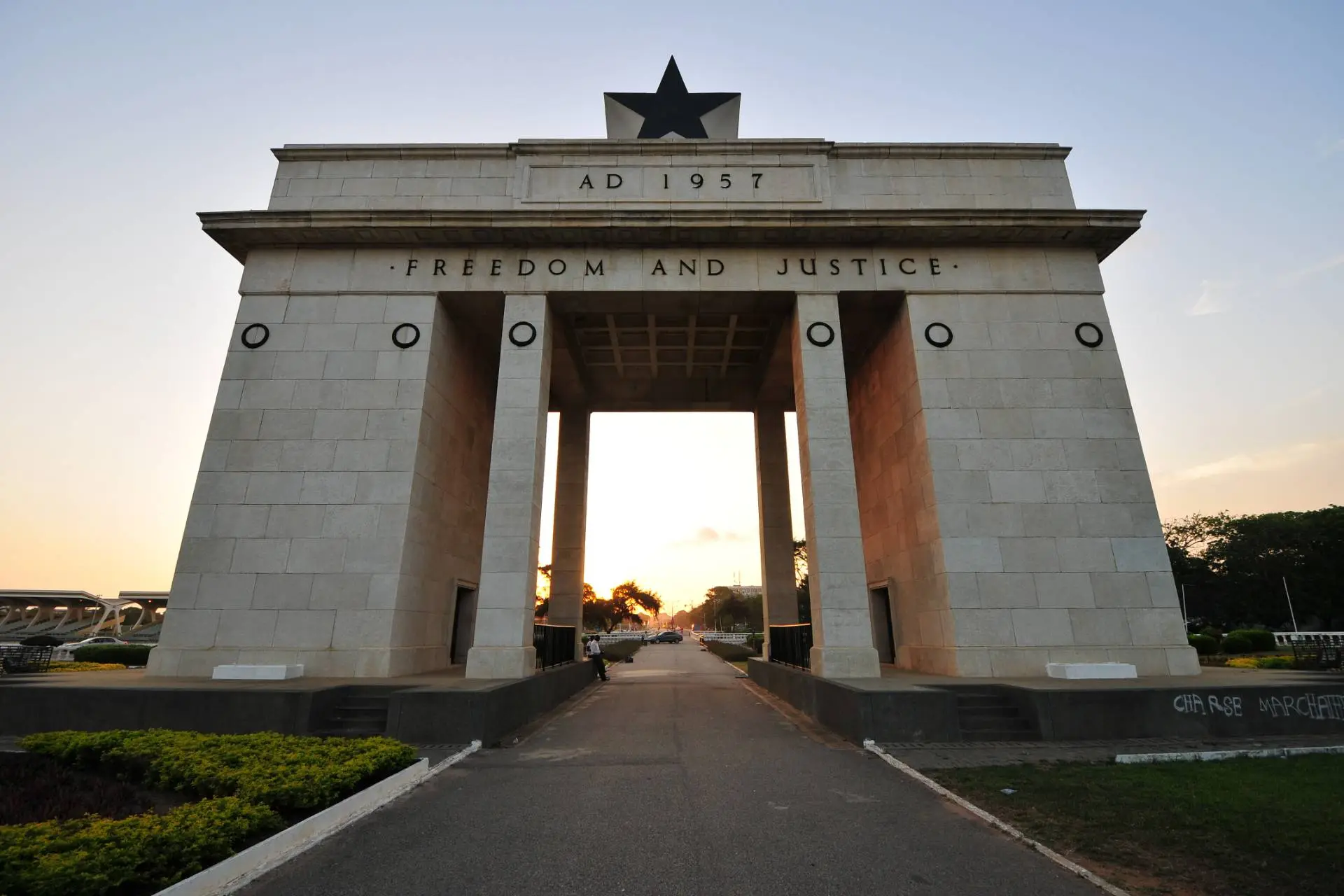
On 6 March 1957, Ghana became the first sub-Saharan African colony to gain independence from European colonial rule in the post-war era. Under Kwame Nkrumah, independence in Ghana became closely connected with the wider movement for African liberation and Pan-African unity.
The Kwame Nkrumah Memorial Park in Accra occupies the site associated with the declaration of independence and contains Nkrumah’s mausoleum, a museum and artefacts connected with his life and political career.
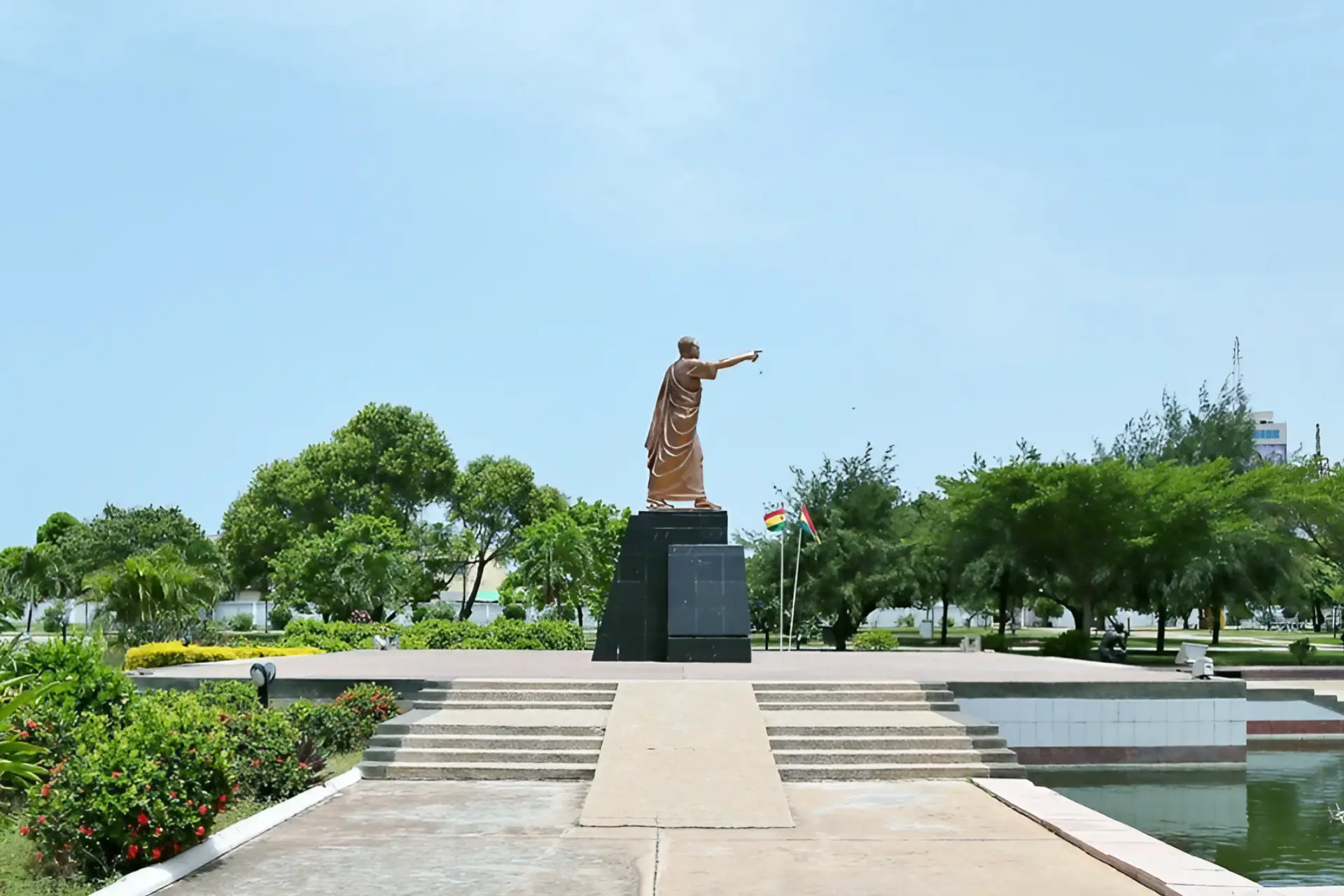
A visit adds another important layer to a heritage journey.
The story has moved from European trading forts and colonial rule to an independent African nation helping inspire liberation movements elsewhere on the continent.
Nearby sites associated with Ghana’s independence era and modern political history allow travellers to see Accra differently — not simply as a capital city, but as one of the key locations in twentieth-century African history.
Understand Ghana’s place in Pan-African history
Ghana’s importance to the African diaspora did not begin with the Year of Return.
After independence, Nkrumah actively encouraged prominent members of the African diaspora to see Ghana as a centre for Pan-African thought and political action.
One of the most important was W.E.B. Du Bois, the American scholar, civil rights activist and Pan-Africanist who spent the final years of his life in Ghana.
Today, the W.E.B. Du Bois Centre in Accra preserves his personal library, memorabilia and final resting place. It remains an important location for understanding the intellectual connections between Ghana, African independence and the wider African diaspora.
This aspect of Ghanaian heritage is particularly relevant for travellers interested in the meaning of “return”.
The relationship between Ghana and the diaspora is not only about tracing the trauma of forced departure. It is also about the later story of reconnection, political solidarity, cultural exchange and the continuing idea of a shared African future.
Make time for festivals and ceremony
Heritage in Ghana is also something that happens in real time.
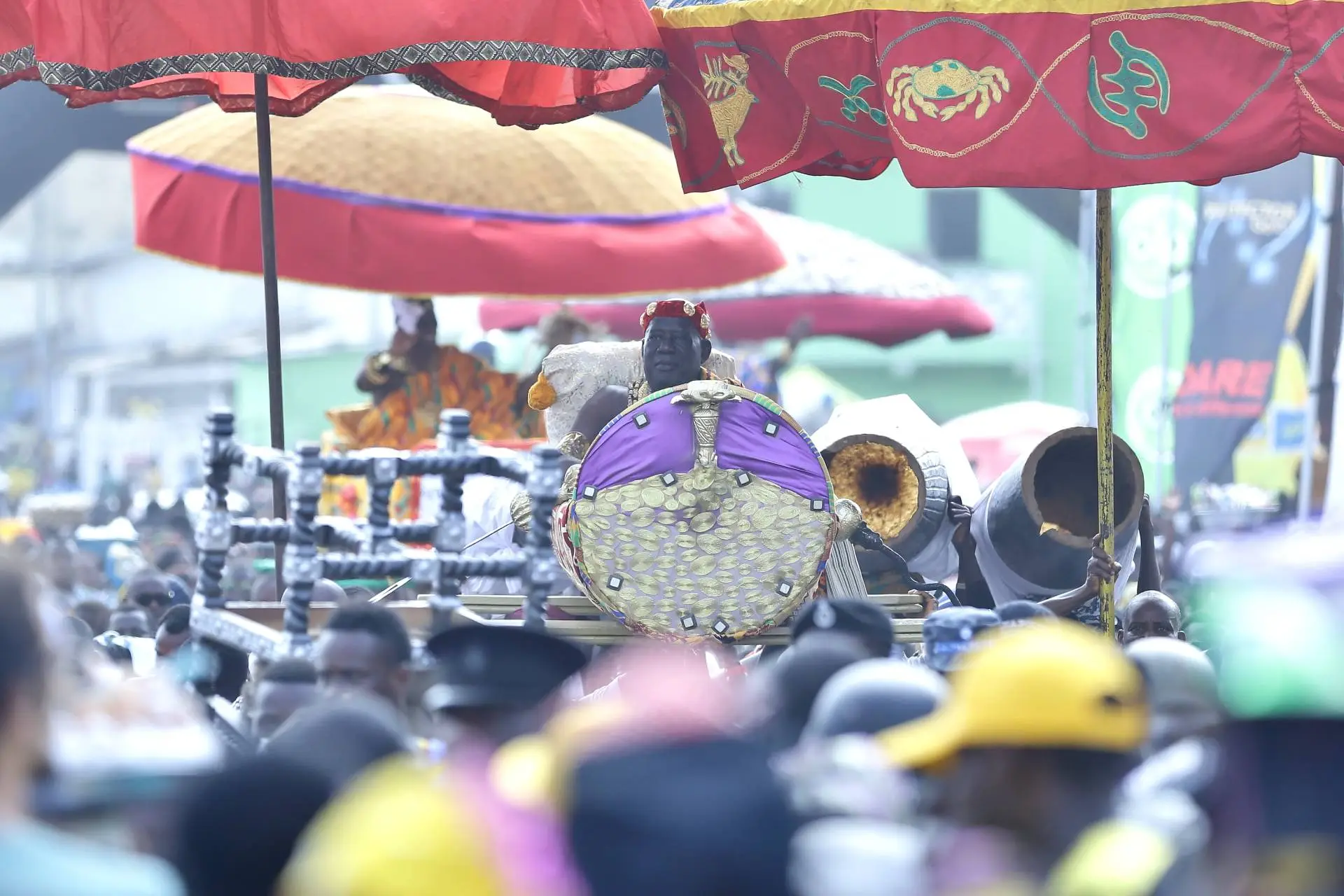
Traditional festivals take place throughout the country and can offer some of the richest cultural experiences available to visitors.
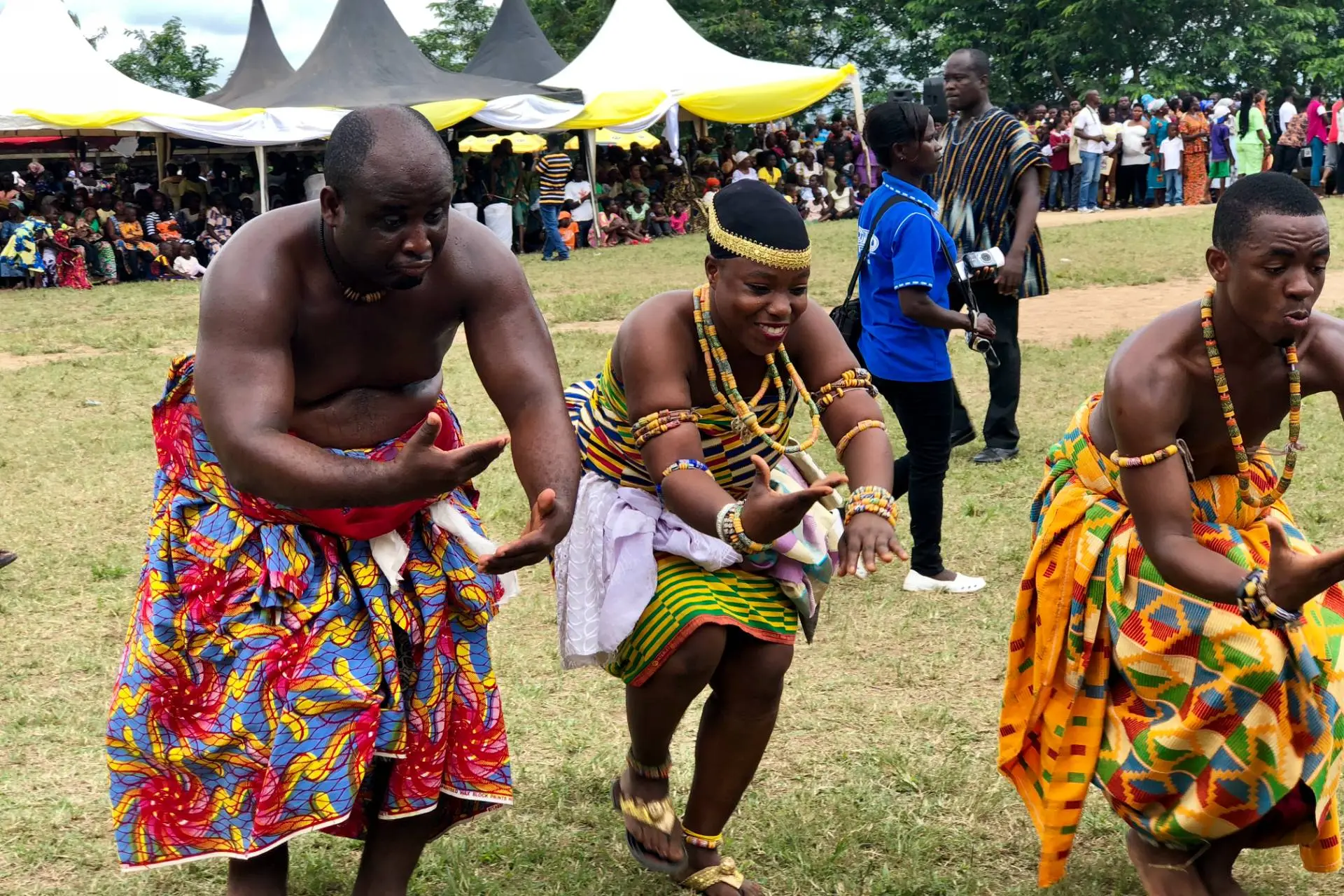
Chiefs and Queen Mothers, traditional drumming, dancing, processions, durbars, royal regalia and community celebrations all remain important parts of Ghanaian cultural life.
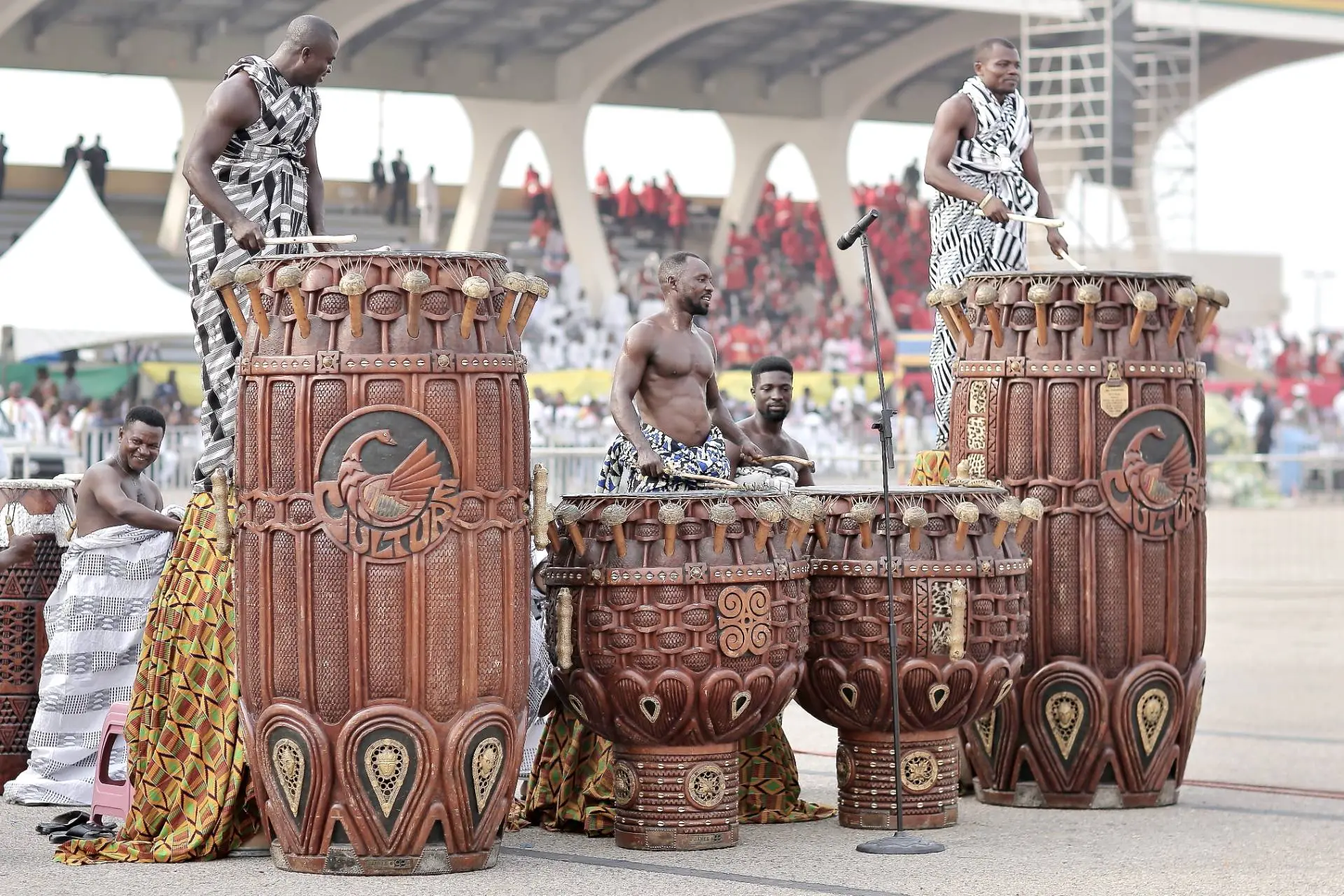
The details differ considerably between regions and ethnic groups, which is precisely why these events are valuable. They demonstrate that Ghanaian identity is not a single tradition but a collection of distinct histories and cultures.
Timing a heritage journey to coincide with an important festival or traditional ceremony can add a dimension that no museum display can reproduce.
These occasions should, however, be approached respectfully. They are first and foremost community events rather than performances created for visitors.
Go beyond the obvious heritage trail
One of the most interesting aspects of Ghana is how much of its history exists away from the established tourism route.
Northern Ghana introduces different architectural traditions, kingdoms and histories. Slave-route sites such as Pikworo and Salaga reveal connections between northern trade networks and the Atlantic coast. Sacred groves, traditional compounds and community museums preserve histories that receive far less international attention than Cape Coast or Elmina.
This is where slower travel becomes particularly valuable.
A rushed itinerary can cover Ghana’s famous landmarks. A well-planned heritage journey connects them.
Cape Coast becomes more meaningful after Assin Manso. The Asante story becomes richer when Manhyia Palace is combined with traditional buildings and craft communities. Nkrumah’s independence story gains additional depth after visiting the W.E.B. Du Bois Centre and understanding Ghana’s wider Pan-African role.
The individual sites matter, but the connections between them are what bring the history to life.
Beyond the Return
Ghana’s Beyond the Return initiative builds on the extraordinary international response to the Year of Return, but the phrase also captures something important about travelling here.
A meaningful heritage journey should go beyond arrival.
It should go beyond photographs at the Door of No Return, beyond a single castle visit, and beyond treating Ghanaian history solely through the lens of slavery.
That history is essential and should never be diminished. But Ghana’s story also encompasses powerful African kingdoms, resistance to colonial rule, independence, Pan-Africanism, spirituality, craftsmanship, music, traditional leadership and cultural traditions that remain active today.
For heritage travellers, that is Ghana’s real strength.
It offers the opportunity not simply to visit places associated with the past, but to understand how that past connects with the Ghana of today.
And that is when a heritage journey becomes something much more valuable than sightseeing.